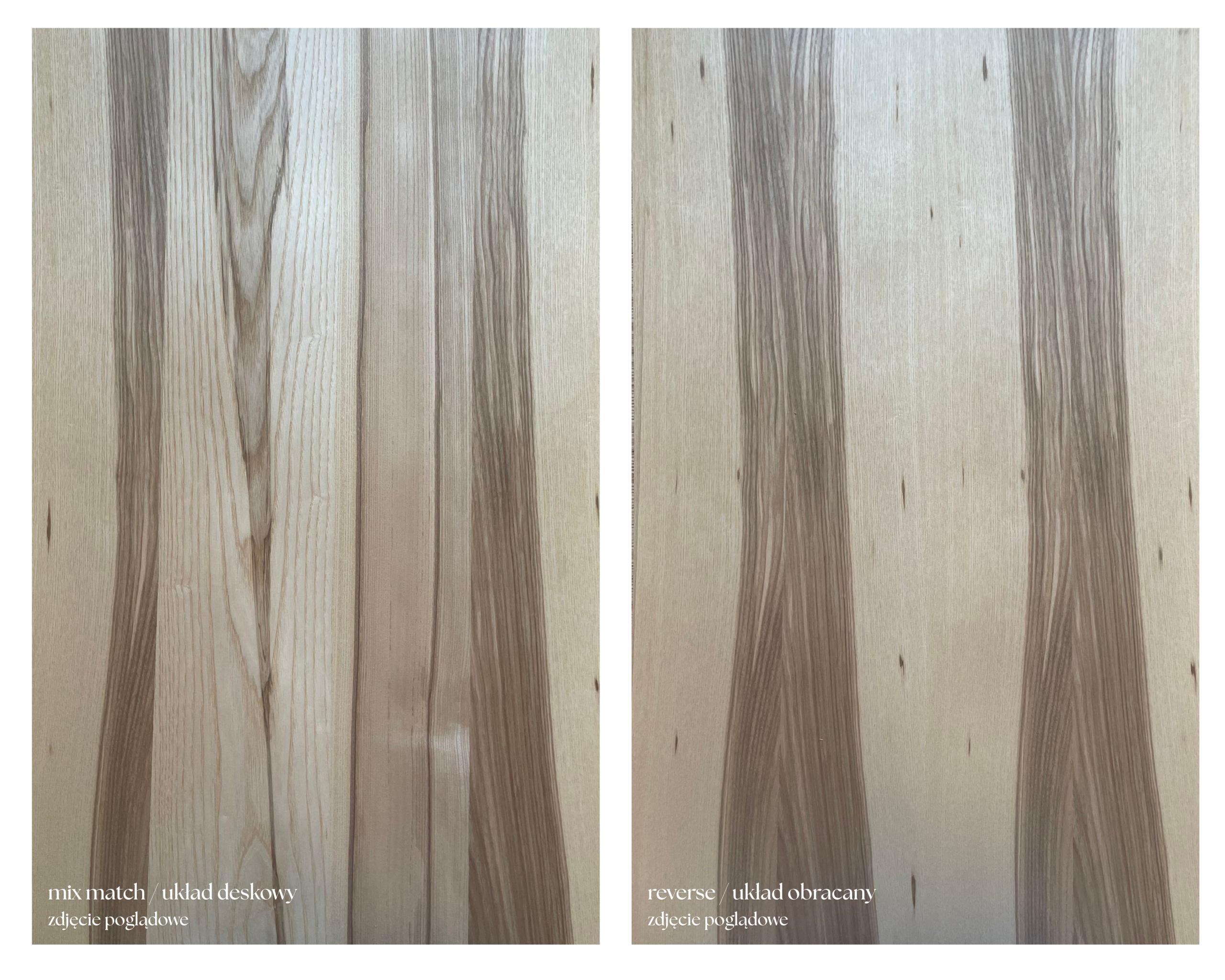
Natural veneer jointing techniques

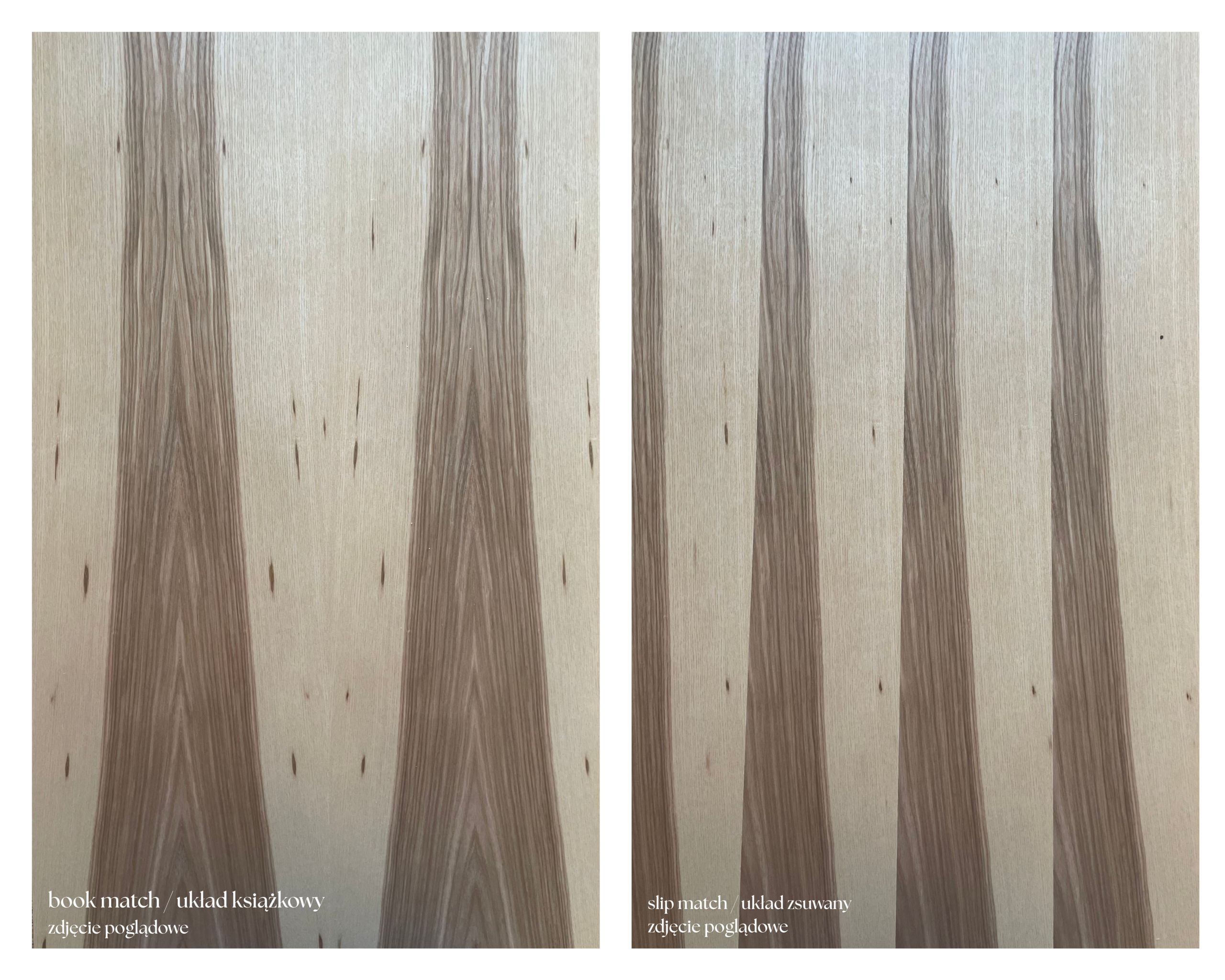
The method of joining natural veneer leaves directly affects the final appearance of the surface – its rhythm, symmetry and overall visual perception in the entire designed space. The same species and the same class of veneer can give a completely different, fascinating effect depending on how the leaves are arranged – from elegant, mirror symmetry to a free pattern resembling solid wooden boards.

The most commonly used veneer jointing methods:

Book match

creates a highly symmetrical, very elegant effect, ideal for classic and luxury furniture,

Slip match

a calm, linear and consistent pattern without clear symmetry, often used in modern projects,

Mix match

imitates the layout of solid boards; provides a natural, free character and the necessary repeatability of the grain for large-format wall surfaces,

Reverse slip match

creates a rhythmic, but slightly less rigorously symmetrical pattern.

Why is the grain layout so important?

Conscious selection of the appropriate veneer jointing technique allows primarily to:

visual consistency

maintain desired in very large projects (e.g. large hotel corridors),

control pattern repeatability

precisely between adjacent elements and furniture fronts,

Match to the interior style

match the character and dynamics of the surface to the selected interior style,

material consumption

optimize (and thus reasonably control the budget of the entire project).

Important note for investors: In professional commercial projects, the method of jointing veneer should always be precisely defined at an early stage of pricing and creating technical documentation, because it has a key impact on the final costs and complexity of the production process.

Let’s realize your project

Contact our team of experts.

Contact us